
Tooth Supported Surgical Guides
Accurate, stable surgical guidance for single implants and partially edentulous patients.
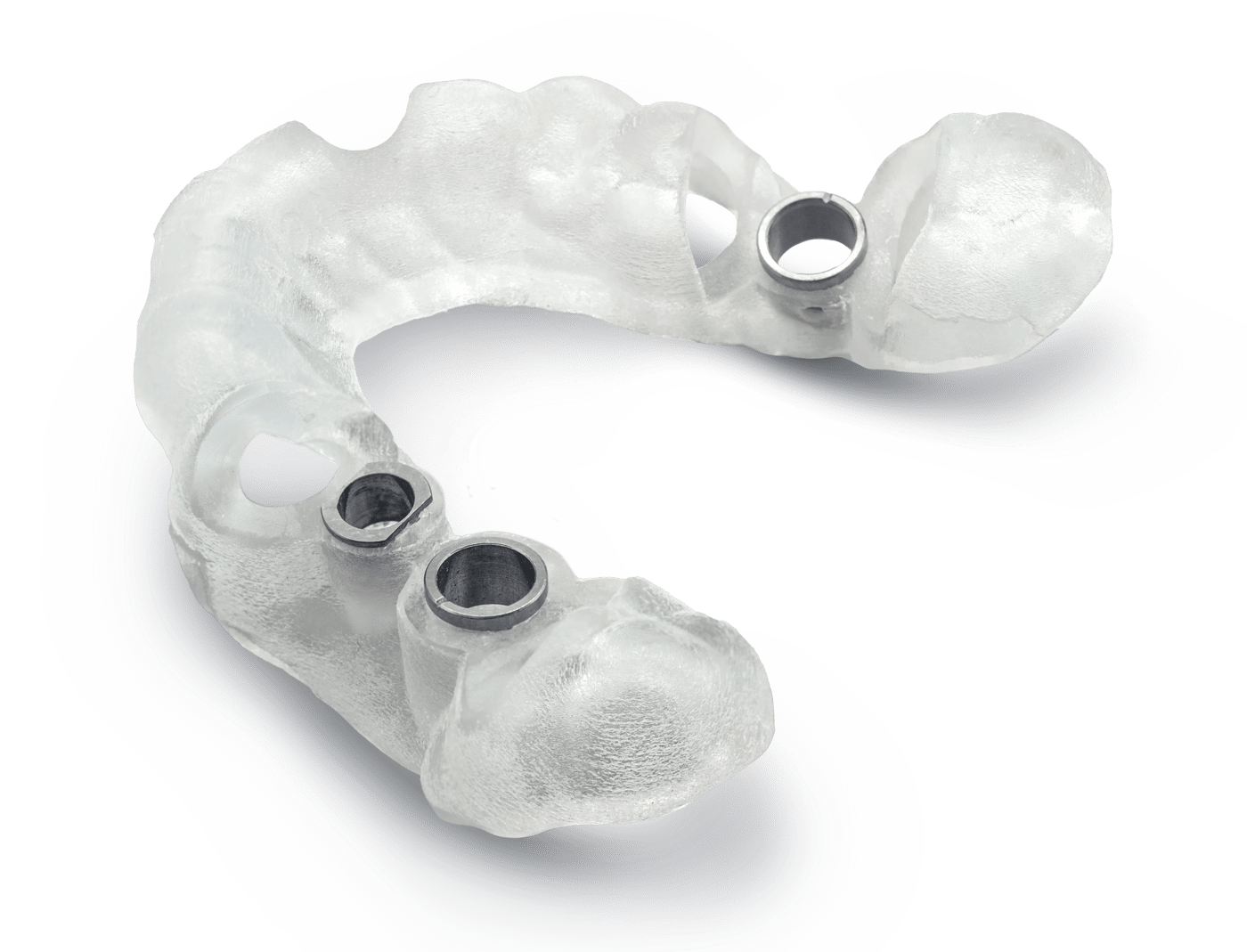
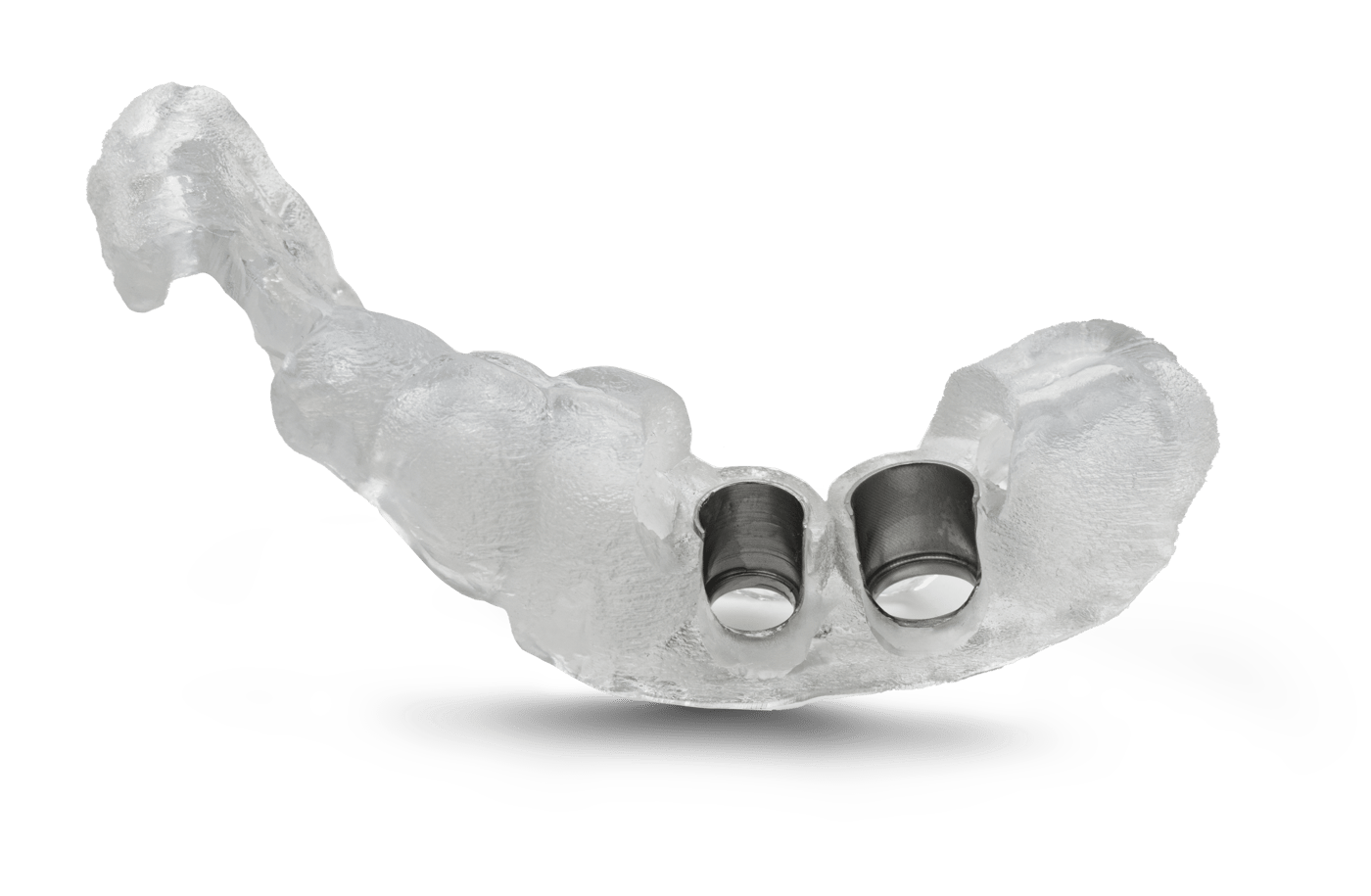
Designed to seat securely on the patient’s existing teeth, our tooth supported guides provide reliable support, stability and retention for restoratively led implant placement.
Existing natural teeth
1–6 implant sites
All implant systems
Fixed restoration cases
Designed around the patient’s existing teeth
Tooth supported guides use the remaining dentition as a reliable anatomical reference, providing the support and stability needed for accurate positioning throughout the surgical procedure.
They are particularly suited to single implant placement and partially edentulous patients, where the existing teeth provide easily reproducible landmarks for guide support, stability and retention.
Guides can be designed for one to six implant sites in fixed restoration cases and are compatible with all implant systems.
Suitable for:
- Single implant placement
- Partially edentulous patients
- Single or multiple implants in fixed restoration cases
- Cases with existing teeth available for guide support
- Treatment involving one to six implant sites
What we need to plan your case
Accurate records allow the patient’s anatomy and existing teeth to be assessed together when planning implant placement and designing the guide.
Digital impression or model
An accurate intraoral scan or suitable physical model showing the treatment arch, remaining teeth and proposed implant sites.
CBCT scan
A clear CBCT scan supplied as DICOM files, showing the relevant anatomy, available bone and surrounding structures.
Prescription and implant details
Details of the proposed treatment, implant sites, selected implant system and relevant clinical or restorative requirements.
Planning a tooth supported guide
Support and stability
The guide should seat fully on the supporting teeth, providing a stable and reproducible position without rocking.
Posterior access
Consider the available space, mouth opening and guided drill length, particularly when planning posterior implant placement.
Implant system compatibility
Guides can be designed for any implant system, with the clinical protocol planned around the selected implant and instrumentation.
Clinical workflow
Follow the approved treatment plan alongside the instructions for your selected implant system and guided surgical instrumentation.
Inspect the guide
Check the implant site positions, guide design and sizing for the intended surgical instrumentation.
Check the fit on the model
If a model has been manufactured, seat the guide on the model to assess its intended fit and position.
Verify the intraoral fit
Seat the guide on the patient’s teeth and verify full, intimate seating before beginning the procedure.
Inspect the seating windows
Check the seating windows to confirm that the guide is fully seated on the supporting teeth with no rocking.
Prepare the surgical site
Remove the guide and raise a flap if planned, or complete the tissue punch procedure.
Complete the osteotomy
Follow the approved implant plan and the guided kit and implant manufacturer’s protocols. Where the selected system permits placement through the guide, proceed accordingly. Otherwise, remove the guide before placing the implant.
Complete the procedure
Complete the required implant placement, bone and soft tissue procedures for the individual case.
Tooth supported guide FAQs
Practical information about case suitability, implant compatibility, guide support and required patient records.
When is a tooth supported surgical guide suitable?
Tooth supported guides are suitable for single implant placement and partially edentulous patients where existing teeth can provide reliable guide support, stability and retention.
How many implant sites can be included?
Tooth supported guides can be designed for one to six implant sites, depending on the clinical requirements of the case.
Can the guide be designed for my implant system?
Yes. Quoris3D tooth supported surgical guides can be designed for any implant system. Provide the selected implant and relevant instrumentation details when submitting your case.
What records are required?
Provide an accurate digital impression or physical model, a CBCT scan supplied as DICOM files, and the relevant prescription and implant information.
How is the guide supported?
The guide seats directly on the patient’s existing teeth, using the remaining dentition as a stable and reproducible anatomical reference.
What should I check before using the guide?
Confirm that the guide seats fully on the supporting teeth without rocking and that there is sufficient access for the planned surgical instrumentation.

Ready to submit your case?
Start your tooth supported surgical guide case or contact our team to discuss your patient’s clinical requirements.

